Why Block-Printed Fabrics Are Better for Your Skin and the Planet
Most of us pick up a kurta because it looks good and fits the budget, and honestly, that's fair. But here's a question we rarely stop to ask: how did that print actually get there? The difference between a kurta printed by a machine in a factory and one stamped by hand using a carved wooden block is not just visual. It shows up in how the fabric feels against your body, how long it lasts and what it costs the environment.
If you have ever wondered why a certain kurta feels rough after a few washes, or why your skin reacts to some fabrics and not others, the answer almost always comes down to how the fabric was made. Block-printed cotton, handled the right way, removes most of those problems and ensures lasting comfort.
At Kami Kubi, block printing is not merely a style choice made for aesthetics alone. It is a deliberate commitment to clothing that genuinely respects both the person wearing it and the world it is made in.
What Makes Block-Printed Fabric Different
Machine printing is engineered for uniformity and volume. A factory can reproduce thousands of metres of identical fabric within a single shift. Block printing operates on an entirely different principle. Each motif is pressed onto cloth by hand, one block at a time and every colour requires its own separate pass.
The result is never perfectly uniform. The block shifts slightly between impressions. Dye absorbs differently depending on the thread and temperature. These small variations are not flaws. They are evidence that a person did this work and that's what makes each piece genuinely one of a kind.
The technique works best on natural fabrics like cotton, linen, dobby cotton and similar breathable weaves. Machine printing runs across synthetics and depends on chemical finishes for consistent output. Those finishes are where most skin-related and environmental concerns begin.
Why It Is Gentler on Your Skin
Block-printed kurtas are, by their nature, made on natural fabric. Cotton breathes, allows air to circulate and does not trap heat the way synthetic materials do. In India's climate, that difference is what makes a cloth easy and comfortable to wear.
Before a factory-made garment reaches a customer, the fabric typically passes through several rounds of chemical treatments, such as anti-wrinkle finishes, synthetic dye fixatives, and surface coatings. These compounds remain in the fabric and rest directly against the skin with every wear. Block-printed fabric, particularly when produced using natural dyes derived from plant and mineral sources, undergoes far fewer of these processes.
Especially for people whose skin does not like every fabric, the differences may be relevant. One of the biggest factors in clothes-related skin problems is dyes or chemical treatments in the clothes. Cotton dye absorbs and gets deeper into the fibres. Therefore, this makes it comfortable, less itchy to the skin and breathable.
What It Means for the Planet
Block printing is, structurally, a low-waste process. Small batches, deliberate production, and natural fabrics all reduce the environmental burden that fast fashion routinely generates. The fashion industry's water pollution problem is largely a result of the synthetic dyeing done at this volume.
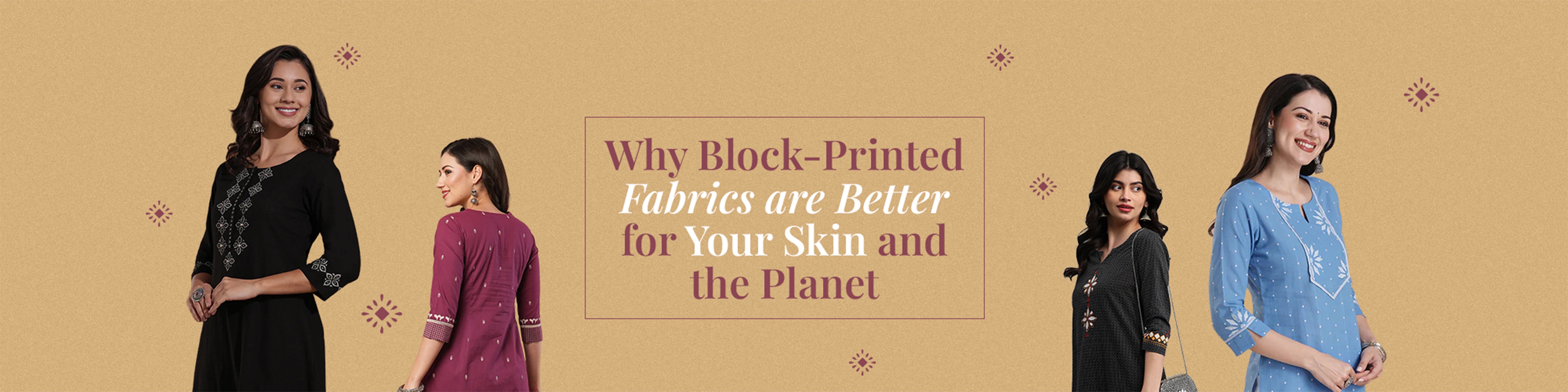
The Kami Kubi Block Print Yoke Kurta Set with Striped Palazzo reflects this, with cotton construction, handcrafted block-print detailing on the yoke, and a silhouette built to be worn across many occasions over many years. The Grey Printed Kurta Bottom Set, crafted in cotton dobby with a traditional hand block print, breathes, lasts and ages beautifully.
The Black Block Printed Kurta Set with Solid Pant and the A-Line Block Printed Cotton Kurta with Mirror Work and Printed Palazzo carry the same philosophy into different silhouettes. Each deepens in character rather than losing quality over time.
Clothing Worth Investing In
Block-printed garments cost more than mass-produced alternatives and the skill involved is real. The time invested is real. What a customer receives in return is fabric that feels good from the first wear, improves with each wash and carries none of the chemical or environmental weight of synthetic textiles.
This is the foundation on which Kami Kubi builds every collection, clothing unfiltered in its honesty about how it is made, designed for women who expect their wardrobe to reflect confidence and genuine care.